Conditions · 12 September 2026 · 6 min read
Sciatica: where the pain comes from and what a chiropractor checks
Why leg pain often starts in the lower back, what changes the plan, and the warning signs that need a doctor the same day.
Sciatica describes a path, not a diagnosis
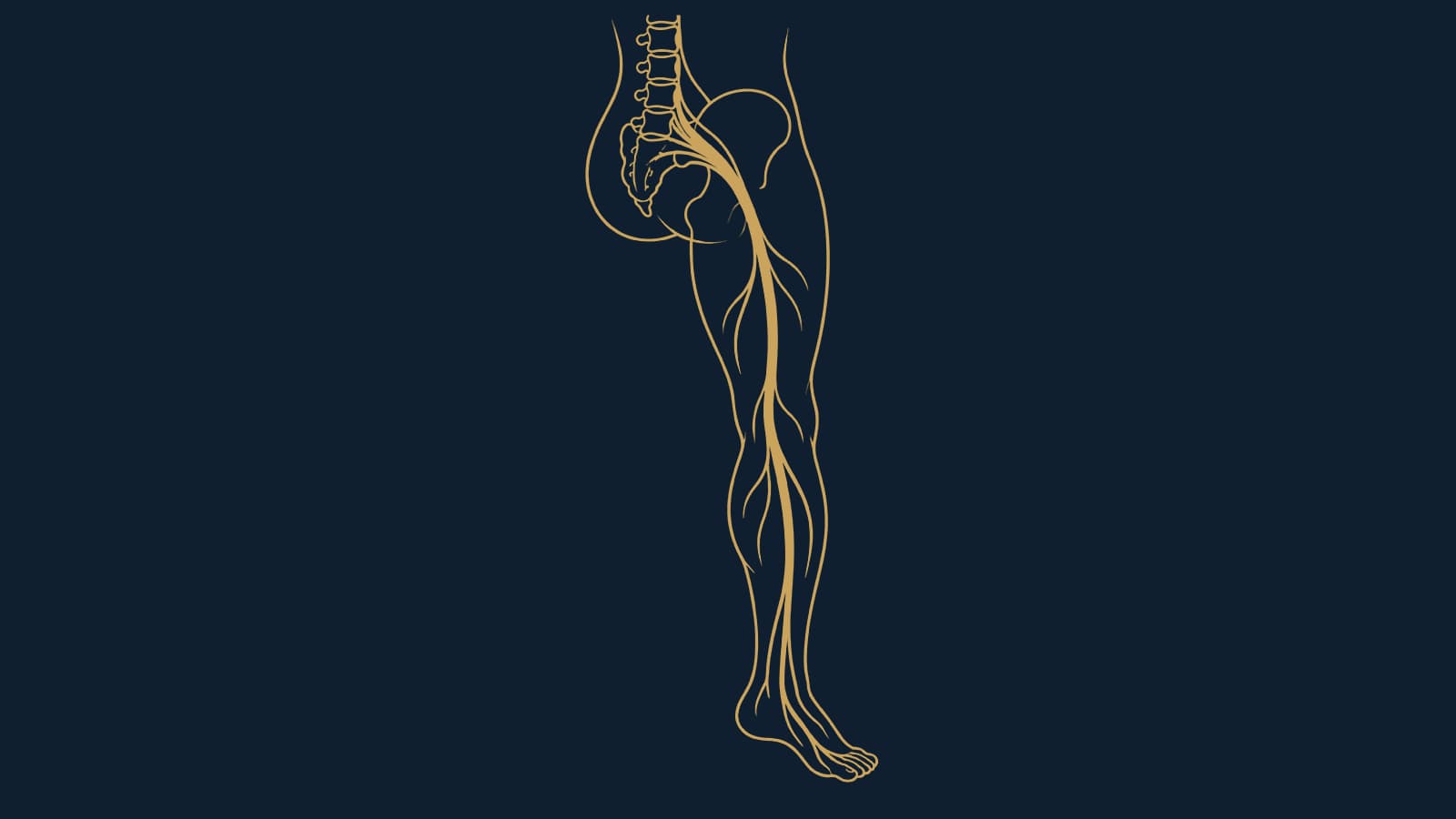
Sciatica is the name people use for pain that runs from the lower back or the buttock down the back of the leg. The national clinical care standard describes nerve related leg pain, commonly called radicular pain or sciatica, as pain that starts somewhere in your back but is felt in your legs.[1]
That is a description of where the pain travels. It does not say which structure is responsible, and two people with the same line of pain down the leg can have quite different things going on in the back. Working out which one is the whole point of the examination.
Where the pain actually comes from
Nerve roots leave the lower spine between the vertebrae, join, and run as the sciatic nerve through the buttock and down the back of the thigh. Anything that crowds or irritates a root where it exits can be felt along that entire path, which is why a problem in the lower back turns up as pain in the calf.
- Disc irritation crowding a nerve root
- Narrowing of the space the nerve passes through
- Arthritic change at the joints behind the disc
- Irritation of the nerve deeper in the buttock
Describe both the leg and back symptoms, including numbness or weakness. The history and examination guide whether further assessment is needed.
What a chiropractor checks
The symptoms get mapped first, because where the pain and any numbness sit says a great deal about which level is involved. Then a neurological screen: reflexes, muscle strength and sensation, along with the tension tests that load the nerve and reproduce the symptoms.
After that comes the Gonstead examination itself, which is looking for the specific level rather than the general region: how you stand and move, a temperature comparison down either side of the spine, the spine felt at rest, and the same joints felt while they move.
The findings that change the plan
Some findings mean this is not something to adjust that day. For acute leg pain without severe or progressive weakness, the standard says initial management is the same as for low back pain, while clinical signs of nerve root or cord compression with rapidly progressive neurological signs call for urgent assessment.[1]
Loss of bladder or bowel control, numbness in the saddle area, weakness in both legs, or pain after a serious accident means calling 000 or going to an emergency department rather than booking with us. Weakness or a reflex that has dropped away and is getting worse means a same day referral to your doctor.
What care looks like
Guidance for low back pain with or without sciatica suggests considering manual therapy, including spinal manipulation, but only as part of a package that also includes exercise.[2] That is how it runs here: adjustments aimed at the level the examination implicates, plus something specific to do between visits, reviewed as we go.
Any proposed care should follow the examination and a discussion of options, risks and alternatives. An adjustment is not appropriate for every presentation.
What helps between visits
The clinical care standard encourages people with low back pain to stay active and return to usual activity as soon as they can.[1]
Tell your clinician if sitting or driving provokes symptoms, so advice can take account of your daily activities.
Where to go from here
There is a fuller page on sciatica, including how it tends to show up and the questions people ask most. If the leg is quiet and it is the back that is the problem, read lower back pain instead. If you want to know what an appointment involves first, that is your first visit.
Sources
- 1. Australian Commission on Safety and Quality in Health Care. Low Back Pain Clinical Care Standard, 2022. View source
- 2. National Institute for Health and Care Excellence. Low back pain and sciatica in over 16s: assessment and management (NG59), 2016. View source
This article is general information, not a diagnosis or a substitute for individual care. The guideline and regulatory positions above are drawn from the cited sources.