How we can help
Children and teens
Children and teenagers get sore backs and necks too, usually from sport, long hours at a desk or a screen, or a body that is still growing. We assess school-age children and teenagers with a parent or guardian present, and refer on when something needs a doctor.
How it tends to show up
Does this sound like you?
01
A strain from sport or training that is slow to settle
02
Neck or upper back aches after long stretches of study or gaming
03
Complaints of a sore back on the walk home with a school bag
04
Aches around the knees or heels in an active, growing child
05
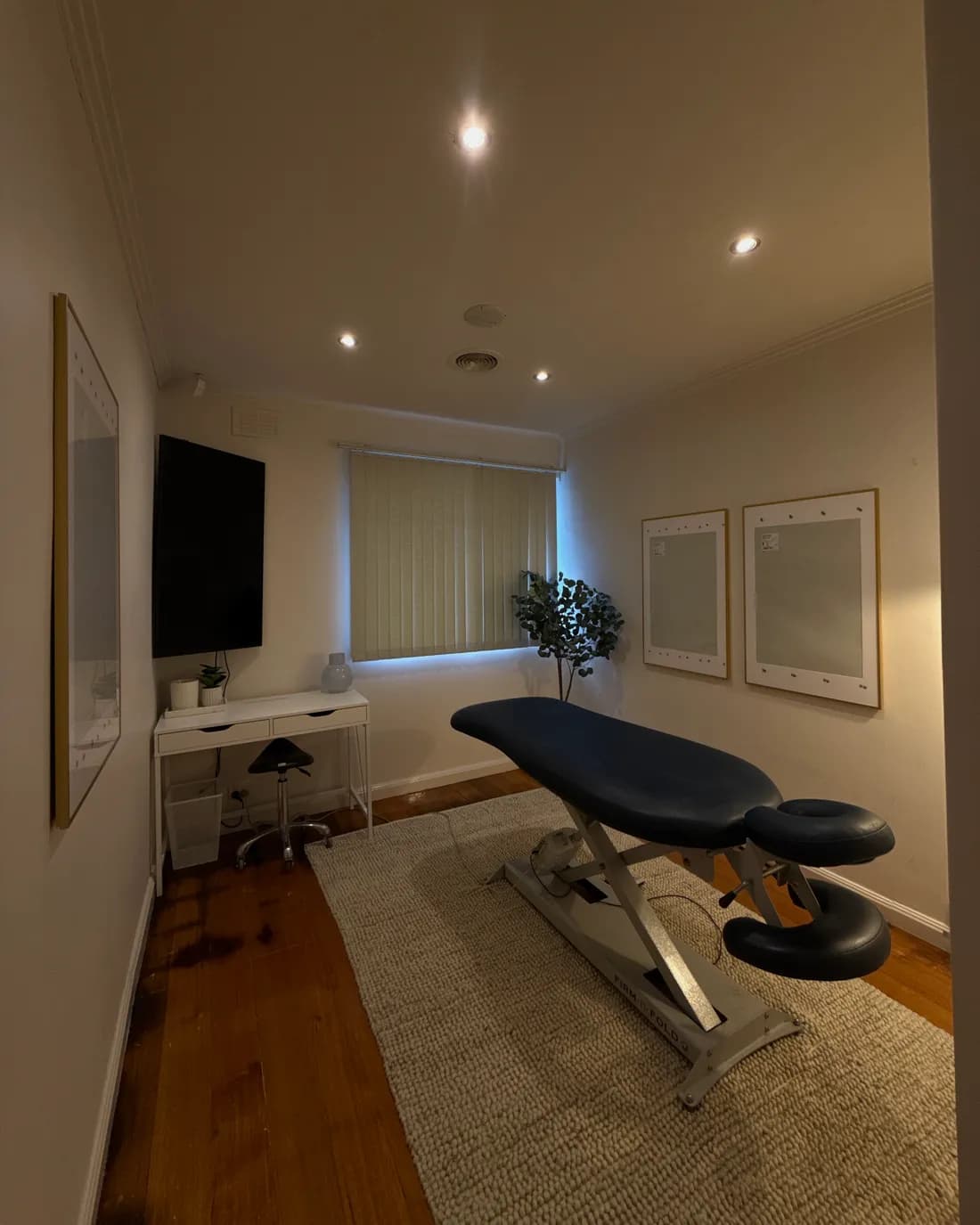
A teenager who slumps at the desk and rubs their neck
How common it is
Back and neck pain are common complaints in Australian children, particularly during adolescence, and consumer guidance notes that children aged 12 and over report significantly more back pain than younger children. [1]
Most of what we see in this age group is ordinary: a strain from sport, a neck that has spent too long over a screen, or a teenager who has grown quickly. If an ache is slow to settle or is getting in the way of sport, an assessment can help work out what is going on.
What can be behind it
Guidance lists minor injuries from sport and play, strains and sprains, intense training in competitive sport, and long periods of sitting among the things that can lead to back pain in young people. [1]
Parents often ask about school bags. Consumer guidance lists heavy bags carried on one shoulder as a factor, [1] although a systematic review of 69 studies found no convincing evidence that schoolbag use increases the risk of back pain in children and adolescents. [2] So we look at the bag, but we look at everything else too.
- Strains and sprains from sport and play
- Repetitive load in sports such as dance, gymnastics or football
- Long hours sitting at a desk or on a device
- Aches around growing bones and tendons in active children
How we assess it
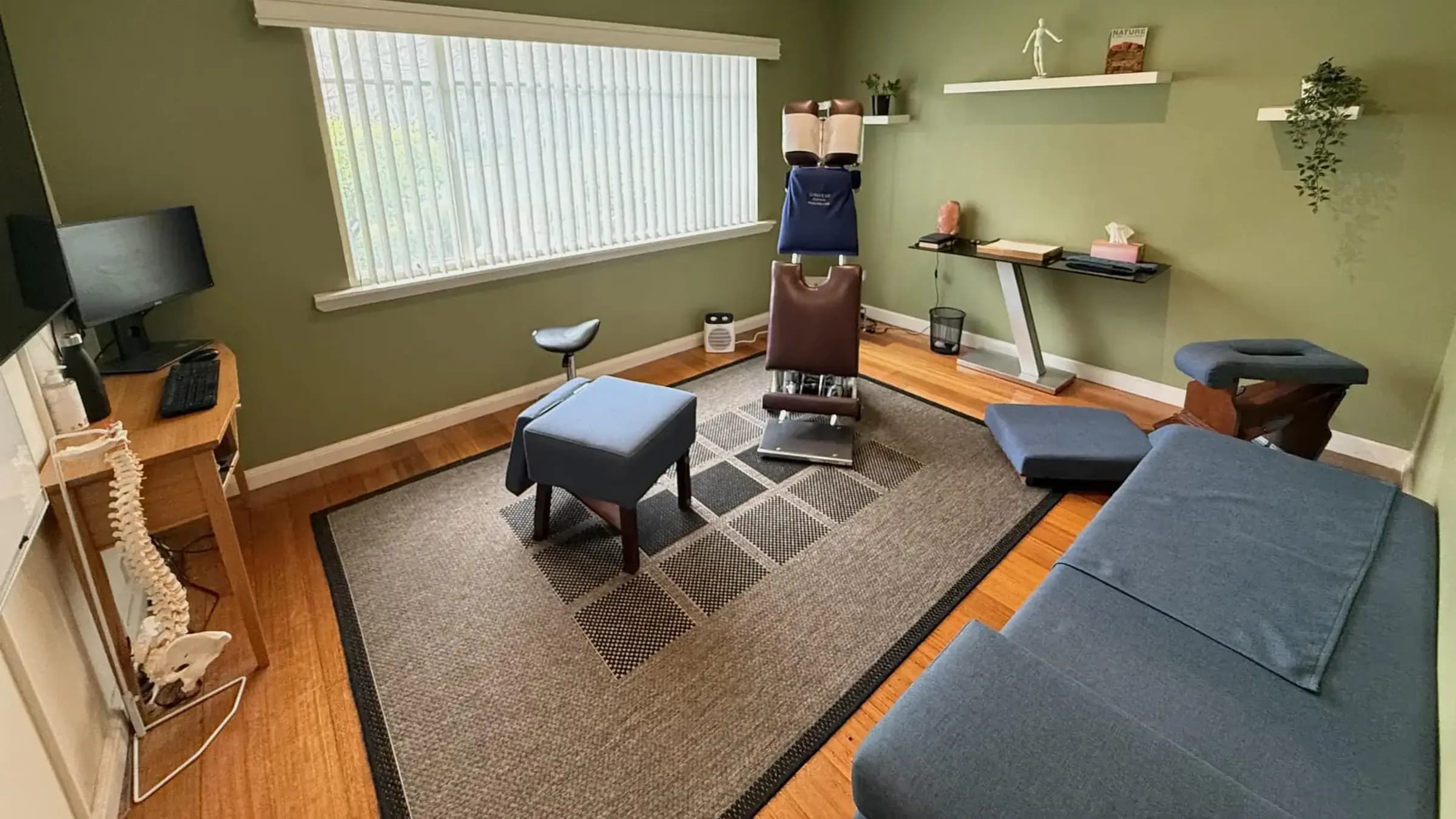
A parent or guardian is present for the consultation and examination. We explain what we find and what we propose to both of you before anything is done, and consent comes from the parent or guardian and, as they mature, from the young person too. [3]
The examination is adapted to age and size: posture and movement, the spine, the hips and limbs, and a check for anything that does not fit an ordinary strain. Guidance advises seeing a doctor about ongoing back pain in a child, particularly pain that wakes them at night or comes with long periods of morning stiffness. [1] Anything of that kind, and any growth-related ache that needs medical assessment, we refer to your doctor rather than treat.
What care looks like
The Board expects care to be modified to suit a child's age, presentation and development, [3] and that is how we work: force and technique are adapted to the young person in front of us, and you can ask about the reasoning, alternatives and risks before deciding.
In line with the Chiropractic Board of Australia's Statement on paediatric care, we do not use spinal manipulation to treat children under two years of age. [3]
For teenagers, care usually comes with practical advice on training load, desk setup and movement breaks. Where your child's doctor or paediatrician is involved, we keep them informed. [3]
When to seek urgent care
We are not an emergency service. If you have loss of bladder or bowel control, numbness in the saddle area, weakness in both legs, or pain after a serious accident, call 000 or go to an emergency department.
Your first visit
What the $99 New Patient Visit includes
New patients only, one per person, no obligation to continue.
- Health history and consultation
- Full Gonstead examination
- X-rays if clinically indicated, with any fee explained first
- Report of findings
- First adjustment if clinically indicated
X-rays are taken only when clinically indicated, and any fee is explained to you first.
Yes. A parent or guardian is present for the visit, gives consent and is part of the discussion about any care we propose. Older children are encouraged to take part in that discussion too.
Not necessarily. We look at the training load and the movements involved, and will be specific about anything to ease off for now. Pain that wakes them at night or keeps building is referred to a doctor.
It can be part of the picture, but a large systematic review found no convincing evidence that schoolbags cause back pain in children, so we look at sport, sitting and growth as well.
No. You can book directly online or by phone. If you have scans or reports from your doctor or a specialist, bring them along.
Most extras policies include chiropractic. We have a HICAPS terminal, so you can claim from participating health funds on the spot and pay only the gap. Bring your health fund card and check your own level of cover.
Sources
- 1. Better Health Channel, Victorian Department of Health. Back pain in children, 2019. View source
- 2. British Journal of Sports Medicine (Yamato and others). Do schoolbags cause back pain in children and adolescents? A systematic review, 2018. View source
- 3. Chiropractic Board of Australia. Statement on paediatric care, 2026. View source
Population figures and guideline positions are drawn from the cited sources. Observations attributed to Dr Arthur Kaganovitch (Chiropractor) reflect his clinical experience and are not claims about outcomes. This page is general information, not a diagnosis or individual advice.
Related
Keep reading

Content updated .
Discuss your pain and care options
Book a $99 New Patient Visit in Mulgrave. Choose a time online.