How we can help
Posture
Posture is about load rather than looking straight. No one sits perfectly, and nobody needs to. What matters is how long a position is held and whether the joints underneath it can still move.
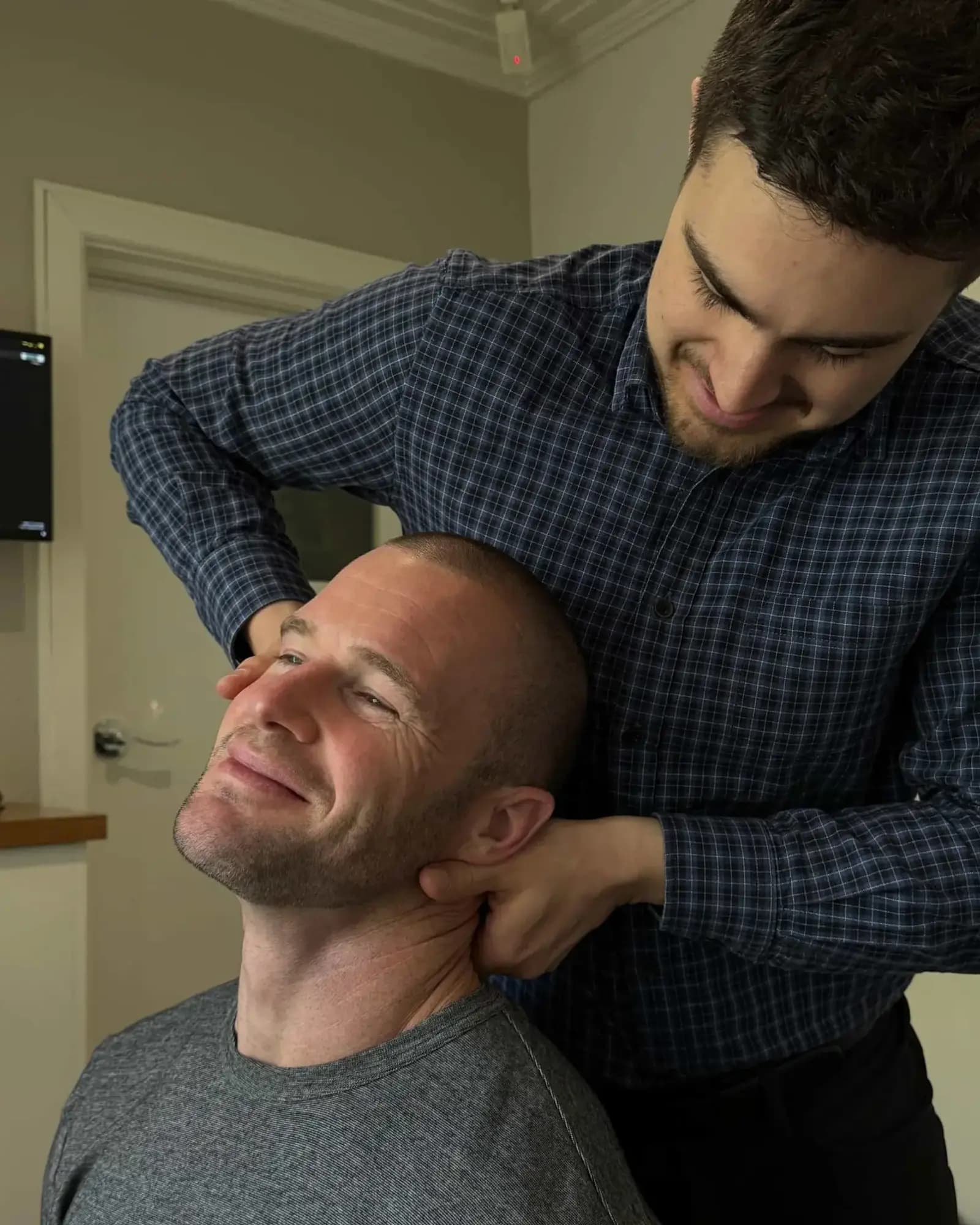
How it tends to show up
Does this sound like you?
01
You notice yourself slumped an hour into the working day
02
Shoulders that sit rounded forward in photographs
03
An ache between the shoulder blades by mid afternoon
04
Standing for long periods is harder than it used to be
05
You feel stiff getting up and loose again after a walk
How common it is
Back problems accounted for 4.3 per cent of Australia's total disease burden in 2023, [1] and a large share of that load is carried by people who spend most of the day seated.
We are not going to tell you that a curve on a photograph is the cause of everything. Many people come to us because a desk job has made an old problem noisier, which is a more useful thing to talk about than a perfect spine.
What can be behind it
Australian consumer guidance lists the complications of poor posture as back pain, spinal dysfunction, joint degeneration, rounded shoulders and a protruding abdomen, [2] and notes that bad habits such as slouching and inactivity cause muscle fatigue and tension that ultimately lead to poor posture. [2]
The mechanism is dull but honest. Sustained positions load the same joints and the same postural muscles for hours, those muscles tire, the joints stop gliding through their full range, and the body starts recruiting whatever else it can. That is why the answer is usually movement rather than effortful sitting up straight.
- Hours held in one position without a break
- Screen and chair heights that force the head forward
- Mid back joints that have stopped moving freely
- General inactivity outside work hours
How we assess it
We look at how you actually stand and move rather than how you hold yourself when you know you are being watched. Where the weight sits, how the shoulders and pelvis line up, and which segments contribute nothing when you bend and turn.
The Gonstead examination then gets specific: heat readings along the spine, palpation at rest and in motion through the neck and the mid back, and a check of the hips, because a pelvis that will not rotate makes the spine above it do the work.
What care looks like
We adjust the segments the examination shows are restricted, and we are candid that adjusting alone will not change how you spend eight hours a day. Good posture is described as feeling effortless, [2] which is a fair test of whether a change has actually helped.
We discuss your movement breaks and screen setup as part of the assessment. Any suggestions take account of your work and what is practical for your day.
When to seek urgent care
We are not an emergency service. If you have loss of bladder or bowel control, numbness in the saddle area, weakness in both legs, or pain after a serious accident, call 000 or go to an emergency department.
Your first visit
What the $99 New Patient Visit includes
New patients only, one per person, no obligation to continue.
- Health history and consultation
- Full Gonstead examination
- X-rays if clinically indicated, with any fee explained first
- Report of findings
- First adjustment if clinically indicated
X-rays are taken only when clinically indicated, and any fee is explained to you first.
Holding the head forward for long stretches loads the neck more than a neutral position does. We would rather talk about how long you hold it than use a scary label for it.
An assessment looks at your symptoms, movement and daily activities. We discuss whether care is appropriate and what changes to your routine may be worth considering, without promising a change in posture.
Not necessarily. The benefit comes from changing position regularly, and a standing desk you never move away from is just another position held too long.
No. You can book directly online or by phone. If you have scans or reports from your doctor or a specialist, bring them along.
Most extras policies include chiropractic. We have a HICAPS terminal, so you can claim from participating health funds on the spot and pay only the gap. Bring your health fund card and check your own level of cover.
Sources
- 1. Australian Institute of Health and Welfare. Back problems, 2024. View source
- 2. Better Health Channel, Victorian Department of Health. Posture, 2015. View source
Population figures and guideline positions are drawn from the cited sources. Observations attributed to Dr Arthur Kaganovitch (Chiropractor) reflect his clinical experience and are not claims about outcomes. This page is general information, not a diagnosis or individual advice.
Content updated .
Discuss your pain and care options
Book a $99 New Patient Visit in Mulgrave. Choose a time online.