How we can help
Disc injuries
A scan report with the word bulge on it frightens people more than it should. Disc changes are common in people with no pain at all, so the finding only matters when it lines up with the examination.
How it tends to show up
Does this sound like you?
01
A deep ache in the back that sitting makes worse
02
Bending forward or getting out of a chair is the hard part
03
Pain that travels into the buttock, leg or arm
04
Coughing, sneezing or straining sends a jolt through it
05
A scan report you have been worrying about since you read it
How common it is
Disc findings on imaging are ordinary. A review of imaging in 3,110 people without symptoms found that the prevalence of disc degeneration rose from 37 per cent of 20 year olds to 96 per cent of 80 year olds, and concluded that many imaging based degenerative features are likely part of normal ageing and unassociated with pain. [1]
Australian consumer guidance says the same thing more plainly: disc protrusions, often called herniated, bulging or prolapsed discs, are often found in people without back pain, and disc bulges, disc space narrowing and disc dehydration are normal, common age related changes. [2]
What can be behind it
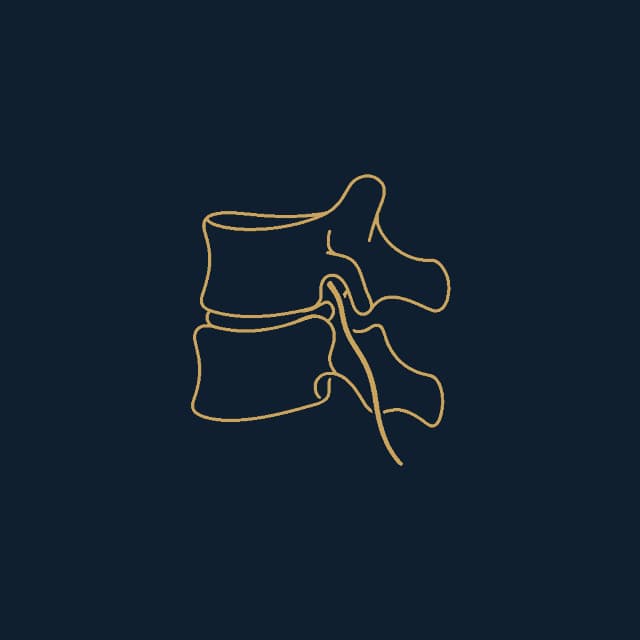
A disc is a spongy cushion between two vertebrae, with a firm outer ring and a softer centre. It does not slip. Discs are held firmly in place by ligaments, and the term slipped disc is an inaccurate one that suggests a movement that does not happen. [2]
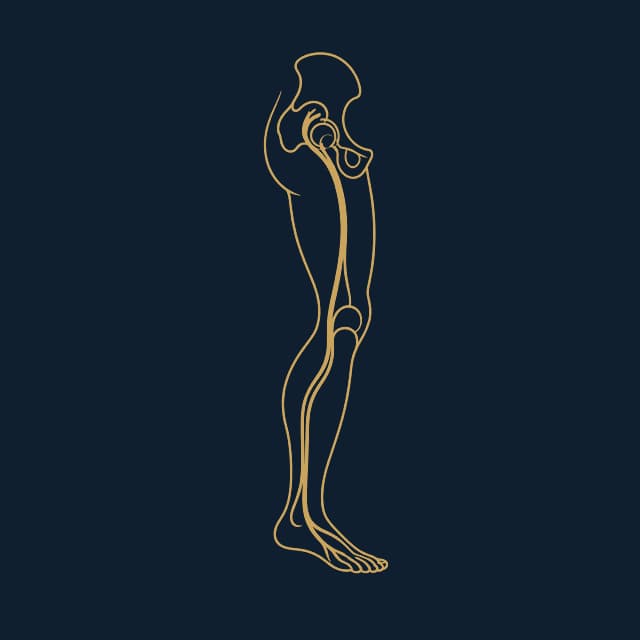
What can happen is that the outer ring is irritated or gives way at one point, so the disc protrudes. For some people a protruded disc can irritate a nearby nerve and result in sciatica, nerve pain spreading into the lower limbs. [2] That is the version that produces leg or arm symptoms rather than back pain alone.
- Irritation of the outer ring of the disc itself
- A protrusion crowding a nerve root nearby
- Age related change that may be incidental
- Guarding in the muscles around the level involved
How we assess it
We read your scan alongside you rather than instead of examining you, and we are careful to say which findings match your symptoms and which are background. A report is a photograph of your anatomy, not a description of your pain.
The examination is the same disciplined Gonstead sequence: how you move, heat readings down the spine, palpation at rest and in motion, and a neurological screen if anything travels past the shoulder or the hip. Weakness that is getting worse, or the red flags below, means medical referral first.
What care looks like
A disc finding does not by itself determine which care is appropriate. We consider your symptoms, examination and any existing scans before discussing options, risks and whether medical referral is needed.
We explain the scan report alongside the examination findings and leave time for questions. You can discuss the proposed plan and alternatives before deciding what to do.
When to seek urgent care
We are not an emergency service. If you have loss of bladder or bowel control, numbness in the saddle area, weakness in both legs, or pain after a serious accident, call 000 or go to an emergency department.
Your first visit
What the $99 New Patient Visit includes
New patients only, one per person, no obligation to continue.
- Health history and consultation
- Full Gonstead examination
- X-rays if clinically indicated, with any fee explained first
- Report of findings
- First adjustment if clinically indicated
X-rays are taken only when clinically indicated, and any fee is explained to you first.
Not on its own. Disc bulges are found routinely in people with no pain, and the prevalence climbs steadily with age. It matters when the finding matches what the examination shows.
It depends on the findings. Dr Arthur screens for the situations where adjusting is not appropriate, adapts the technique and the position when it is, and refers you on where a medical opinion is the right next step.
Usually not. Imaging is reserved for suspected serious pathology rather than used routinely, and a scan that shows ordinary age related change often adds worry without changing the plan.
No. You can book directly online or by phone. If you have scans or reports from your doctor or a specialist, bring them along.
Most extras policies include chiropractic. We have a HICAPS terminal, so you can claim from participating health funds on the spot and pay only the gap. Bring your health fund card and check your own level of cover.
Sources
- 1. Brinjikji W and colleagues, American Journal of Neuroradiology. Systematic Literature Review of Imaging Features of Spinal Degeneration in Asymptomatic Populations, 2015. View source
- 2. Better Health Channel, Victorian Department of Health. Back pain and disc problems, 2022. View source
Population figures and guideline positions are drawn from the cited sources. Observations attributed to Dr Arthur Kaganovitch (Chiropractor) reflect his clinical experience and are not claims about outcomes. This page is general information, not a diagnosis or individual advice.
Related
Keep reading
Content updated .
Discuss your pain and care options
Book a $99 New Patient Visit in Mulgrave. Choose a time online.