Conditions · 10 September 2026 · 5 min read
Lower back pain at a desk: what actually matters
It is less about the perfect chair and more about how long you stay still. Practical changes for a desk day, and when to get the back checked.
How common this is
Back problems are among the most common reasons people in Australia see a health practitioner. Around 4.0 million people, about one in six, were estimated to be living with back problems in 2022.[1]
At an assessment, it is useful to describe when symptoms started and which daily activities are affected.
Discussing your desk setup
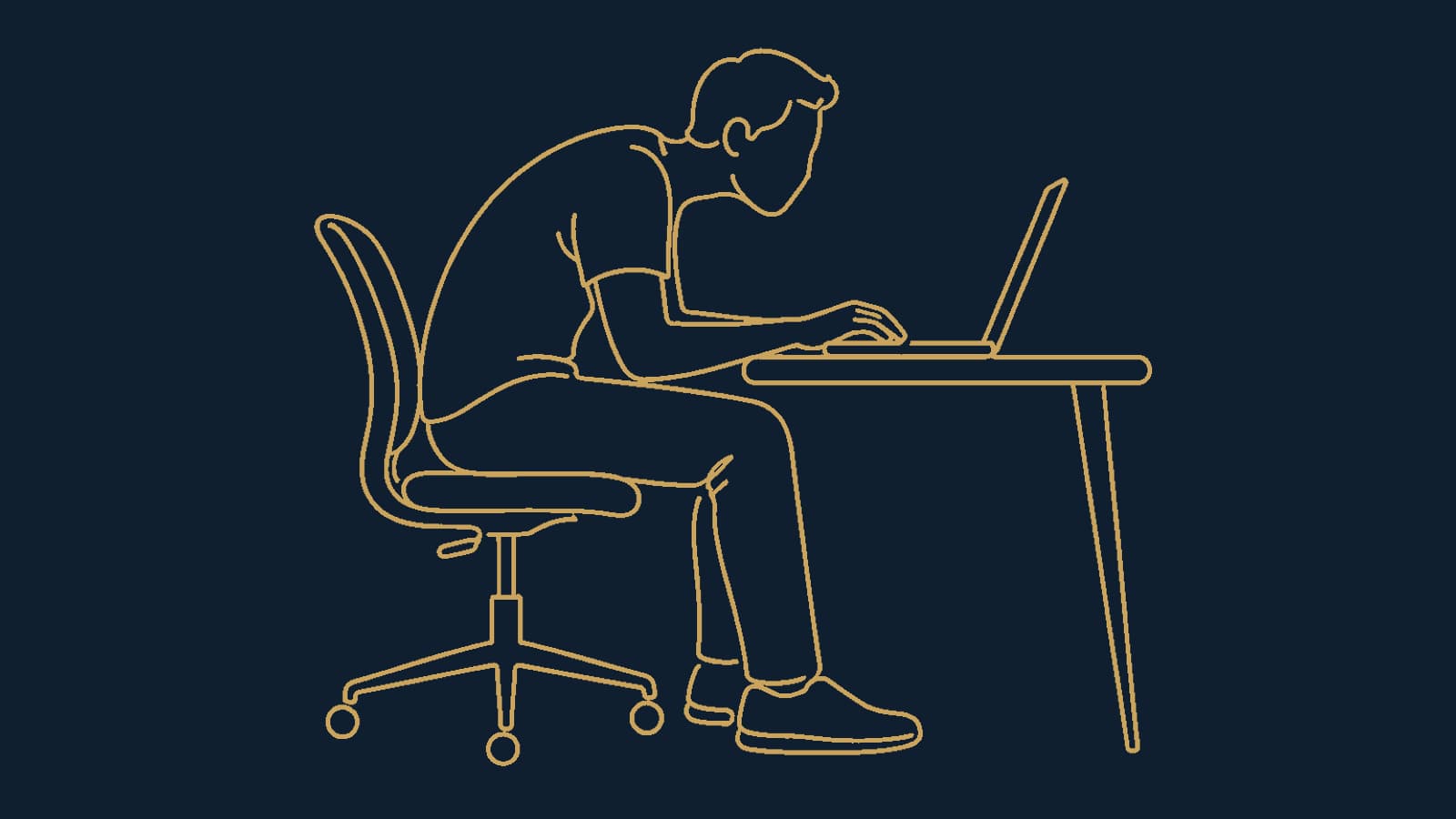
Your work setup and the time spent sitting are useful parts of the history. A chair or workstation alone does not establish why your back hurts.
Discuss the positions and tasks that bring on symptoms, as well as opportunities to change activity during the day.
Noting the pattern of symptoms
If symptoms are worse in the morning, note how long they last and what changes them. That information belongs in the assessment rather than being assumed to come from sitting.
Tell your clinician about new, persistent or worsening symptoms, even if they vary throughout the day.
Four practical options to discuss
These are practical options to discuss in light of your symptoms and work requirements, rather than a treatment prescription.
- Break up the sitting. Consider where movement breaks could fit into your working day.
- Change position rather than perfect it. Sit back for a while, then forward, then stand. Variety is the point.
- Take the phone calls standing. If comfortable and practical, this can be one opportunity to change position.
- Keep moving outside work. Discuss activities you can manage and enjoy outside the working day.
Staying active is the advice, not rest
When a desk back does flare, the instinct is to lie down and wait. The clinical care standard encourages people with low back pain to stay active and return to usual activity as soon as they can.[2] That does not mean pushing through anything that hurts. It means keeping the things you can tolerate rather than stopping everything.
Ask your clinician how to adapt activities that are difficult for you, and when a review is needed.
What a desk cannot explain
Not every sore back at a desk is a desk problem, and it is worth knowing which findings point elsewhere. Pain that travels below the knee, numbness or pins and needles, a back that is worse at night or wakes you, or pain that has followed a fall or a crash all belong in an examination rather than in a new chair.
Loss of bladder or bowel control, numbness in the saddle area, weakness in both legs, or pain after a serious accident means calling 000 or going to an emergency department.
When to get it looked at
If pain persists, worsens or interferes with daily activities, discuss it with a health professional. New neurological symptoms or the warning signs above need prompt medical attention.
What that examination involves is set out in what to expect at your first visit. If the pain is running into the leg, read sciatica. If it is sitting squarely in the lower back, start with lower back pain.
Sources
- 1. Australian Institute of Health and Welfare. Back problems, 2024. View source
- 2. Australian Commission on Safety and Quality in Health Care. Low Back Pain Clinical Care Standard, 2022. View source
This article is general information, not a diagnosis or a substitute for individual care. The guideline and regulatory positions above are drawn from the cited sources.