How we can help
Lower back pain
Most lower back pain is not dangerous, but it is disruptive, and it often returns. We look for the specific level of the spine that is not moving well and work on that, rather than treating the whole back the same way.
How it tends to show up
Does this sound like you?
01
Stiff first thing in the morning, easing once you move
02
Aching after sitting or driving for a while
03
A sharp catch when you bend, lift or turn
04
Pain that has come and gone for months or years
05
Pain that spreads into a buttock or thigh
How common it is
Back problems are among the most common reasons people in Australia see a health practitioner, and the lower back is the largest part of that. Around 4.0 million people, about one in six, were estimated to be living with back problems in 2022. [1]
For most people an episode settles within weeks, but recurrences are common, and the pattern of settle and return is what brings many people to us.
What can be behind it
The lower back is five vertebrae, the discs between them, the small facet joints at the back, and the muscles and ligaments that hold it all together. Pain can come from any of these, and often from more than one at once.
A specific diagnosis is not always possible, and the national clinical care standard reserves imaging for suspected serious pathology rather than routine use. [2] That is why our examination comes first and X-rays are taken only if the findings call for them.
- Joint stiffness at one or two levels
- Disc irritation, with or without leg pain
- Muscle guarding after a strain
- Postural load from long hours of sitting
How we assess it
Your history first: when it started, what changes it, and what you have tried. Then a Gonstead examination: posture and movement, an instrument that reads heat differences along the spine, and careful palpation at rest and in motion to find the level involved.
If the examination points to a reason for X-rays, they are taken on site and any fee is explained first. If it does not, we do not take them.
What care looks like
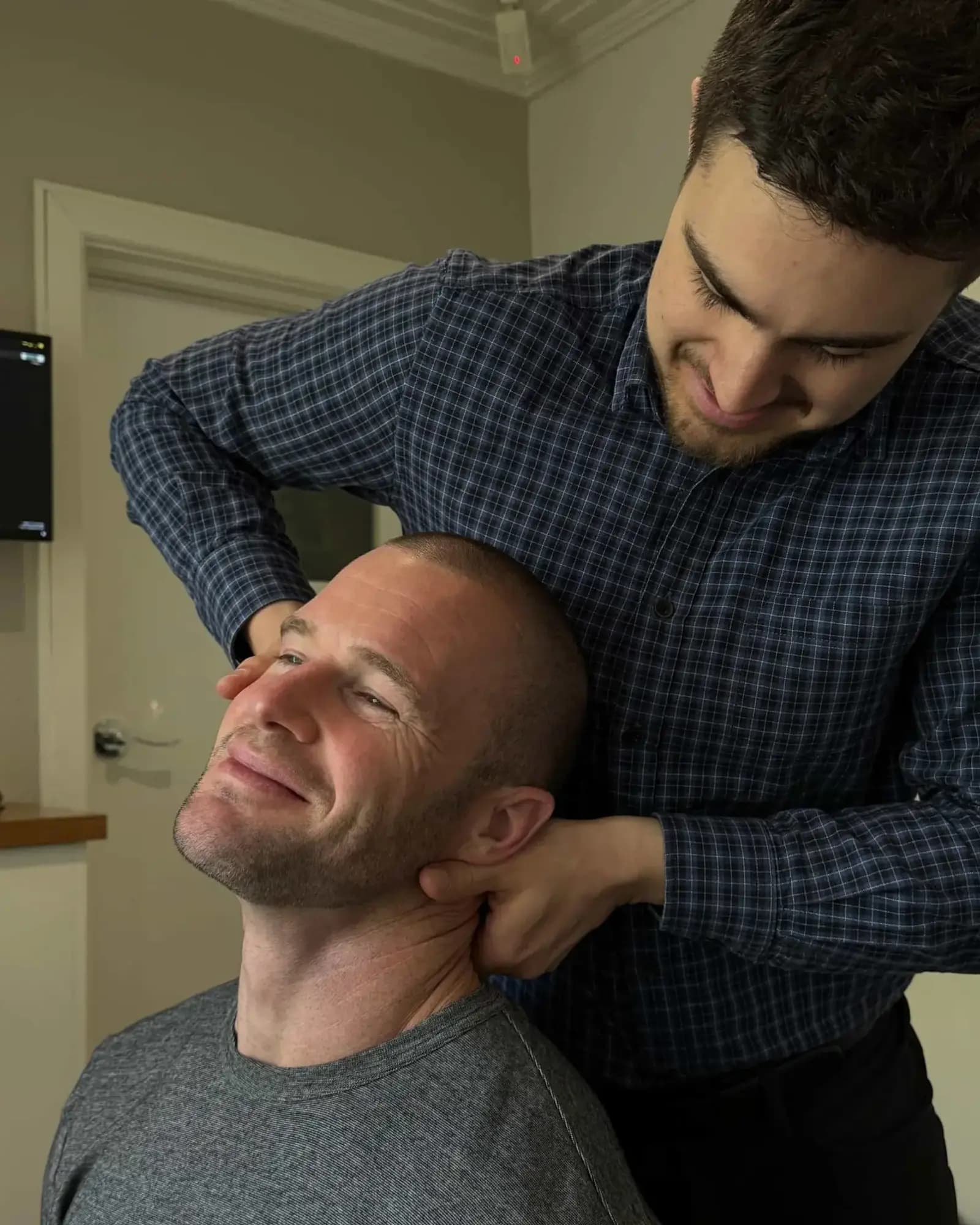
If an adjustment is proposed, Dr Arthur explains the area to be addressed and the position used. You can ask about the reasoning, alternatives and risks before deciding.
The clinical care standard encourages people with low back pain to stay active and return to usual activity as soon as they can. [2] We give you something to do between visits and review progress as we go. We do not promise a timeline; we tell you what we find and what we recommend.
When to seek urgent care
We are not an emergency service. If you have loss of bladder or bowel control, numbness in the saddle area, weakness in both legs, or pain after a serious accident, call 000 or go to an emergency department.
Your first visit
What the $99 New Patient Visit includes
New patients only, one per person, no obligation to continue.
- Health history and consultation
- Full Gonstead examination
- X-rays if clinically indicated, with any fee explained first
- Report of findings
- First adjustment if clinically indicated
X-rays are taken only when clinically indicated, and any fee is explained to you first.
For most episodes, gentle movement helps more than bed rest. We will tell you what to avoid for now based on what the examination finds.
No. Bring any you already have. The national standard reserves imaging for suspected serious pathology, and we take X-rays only if the examination calls for them.
Suitability depends on your health history and examination. Dr Arthur discusses the proposed care, its risks and alternatives before you decide, and refers you on when another assessment is needed.
No. You can book directly online or by phone. If you have scans or reports from your doctor or a specialist, bring them along.
Most extras policies include chiropractic. We have a HICAPS terminal, so you can claim from participating health funds on the spot and pay only the gap. Bring your health fund card and check your own level of cover.
Sources
- 1. Australian Institute of Health and Welfare. Back problems, 2024. View source
- 2. Australian Commission on Safety and Quality in Health Care. Low Back Pain Clinical Care Standard, 2022. View source
Population figures and guideline positions are drawn from the cited sources. Observations attributed to Dr Arthur Kaganovitch (Chiropractor) reflect his clinical experience and are not claims about outcomes. This page is general information, not a diagnosis or individual advice.
Content updated .
Discuss your pain and care options
Book a $99 New Patient Visit in Mulgrave. Choose a time online.