Conditions · 19 January 2027 · 5 min read
Neck pain, phones and laptops: what the research says and what to change
Is "text neck" real? What looking down at a phone or laptop does to the neck, practical changes to your setup, and what I check.

Most of us spend hours a day looking down at a phone or a laptop, and a stiff, aching neck at the end of the day is one of the things I hear about most often at the clinic. This article looks at what screens do to the neck, what the research does and does not show, and the practical changes worth trying. If your neck pain comes with headaches, there is a separate article on headaches that start in the neck.
Is "text neck" a real thing?
"Text neck" is a popular name, not a diagnosis. The idea behind it comes partly from a 2014 computer model that estimated the load on the neck rises sharply as the head tips forward, from around 5 kilograms upright to around 27 kilograms at 60 degrees of bend [1]. That number gets quoted a lot. It is worth knowing it came from a model, not from measuring people's necks.
When researchers have looked at real people, the picture is less simple. A 2018 study of young adults found no clear link between the head-forward posture people used when texting and whether they had neck pain [2]. So posture alone does not seem to explain it.
My view, from years of examining necks, is that the angle of your head is only part of the story. How long you hold any one position, how little you move during the day, how well you sleep and how much stress you are carrying all play a part too. That is good news, because it means you do not need a perfect posture. You need a bit more variety.
Why does my neck ache after a day on the laptop?
A laptop forces a compromise. If the screen is at a comfortable height, the keyboard is too high. If the keyboard is at a comfortable height, the screen is too low, so you spend the day looking down. The muscles at the back of the neck and across the shoulders hold your head there for hours with little change, and that sustained effort is usually what people feel by late afternoon.
Couches, beds and kitchen benches make it worse, because there is nowhere to rest your forearms and the screen ends up even lower.
How should I set up a laptop?
If you use a laptop for more than an hour or two a day, these changes are worth making:
- Raise the screen. A laptop stand, or a stack of books, so the top of the screen sits around eye level.
- Add a separate keyboard and mouse. Once the screen is raised, you need these so your shoulders can relax and your elbows sit by your sides.
- Arm's length away. Roughly an arm's length from your eyes to the screen is a reasonable starting point.
- Use a second screen if you have one, set straight in front of you rather than off to one side, if it is the one you look at most.
- Check your glasses. If you wear multifocals, you may be tipping your head back to read the screen. Your optometrist can advise on computer glasses.
Our article on lower back pain at a desk covers the chair and the sitting side of the same setup.
What about phones?
Phones are harder to set up, because we use them everywhere. A few habits help:
- Bring the phone up towards eye level, rather than taking your eyes down to your lap. Resting your elbow on your other arm or a table makes this easier to hold.
- Use voice for longer messages and calls rather than typing with your head down.
- Notice where you scroll. Long sessions lying in bed with the head propped on a pillow, or slumped on the couch, are worth swapping for a few shorter ones sitting up.
- Put it down between tasks. The phone that comes out at every red light, queue and ad break adds up to a lot of time looking down.
How often should I move?
There is no magic number, but more often than most of us do. A reasonable habit is to change position or get up regularly through the day: stand for a phone call, walk to fill your water bottle, look away from the screen into the distance for a moment. Some people find a reminder on their watch or computer helps.
A few gentle movements through the day, if they are comfortable for you, can break up a long stretch of looking down: slowly tuck your chin in, roll your shoulders back, turn your head to look over each shoulder, and tip each ear towards that shoulder. Keep them easy. Stop anything that sharpens your pain, and mention it at your next visit.
When is neck pain worth having checked?
Changing your setup and habits is a sensible place to start. It is worth having your neck looked at if the pain keeps coming back, has been there for a while, interferes with work or sleep, or comes with pain, pins and needles or numbness travelling into the arm or hand.
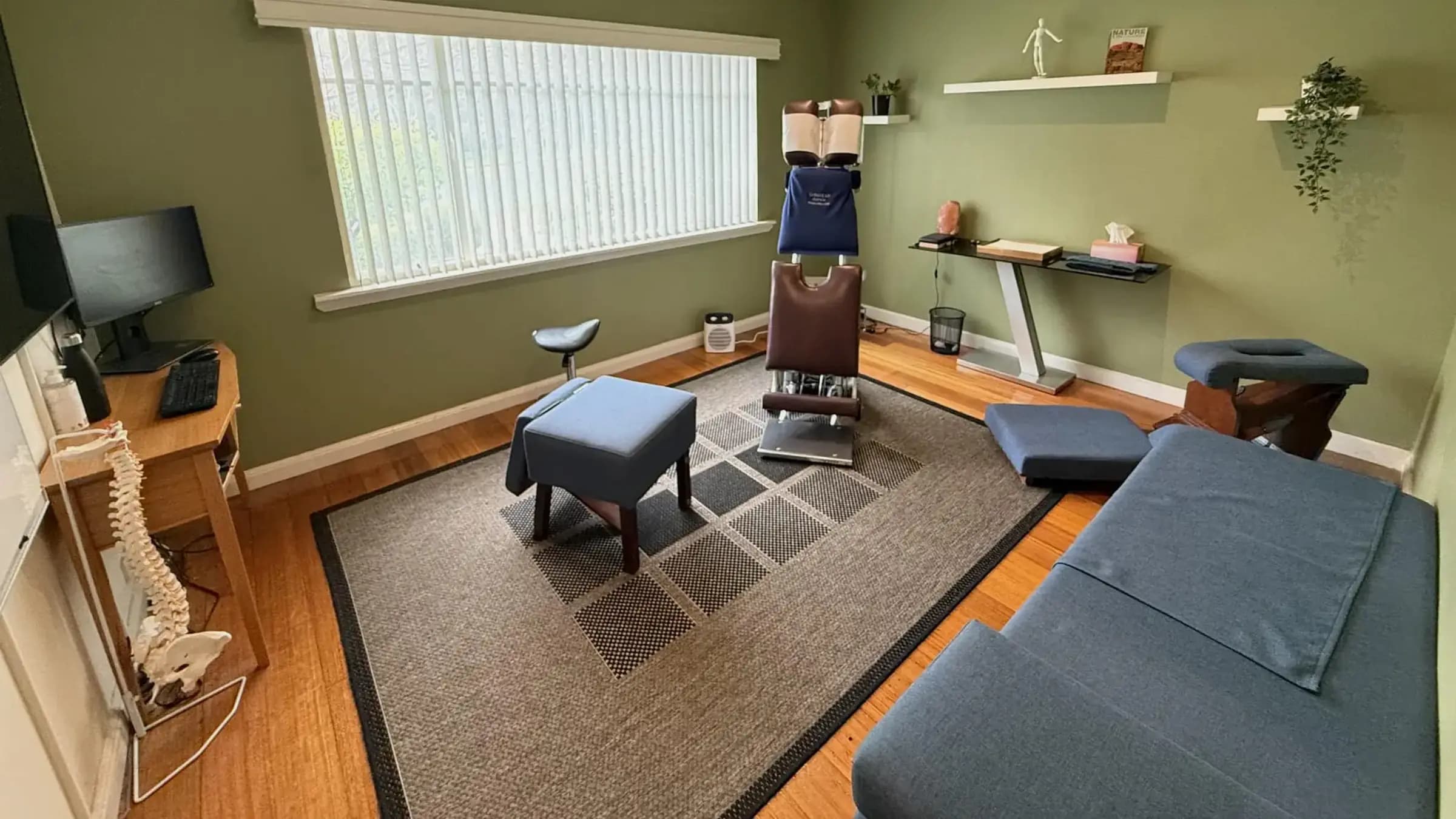
At a first visit, I take your history, including how you work and how you use your devices, and examine how your neck moves. In the Gonstead system I check the neck and upper back level by level, at rest and while moving. I also carry out nervous system testing, and take X-rays only if they are clinically indicated. Then, at your report of findings, a separate visit after the first, I explain what I found and whether chiropractic care is suitable for you. If something sits outside chiropractic, I refer you to your GP.
You can read more about neck pain and how we can help, and what happens step by step in what to expect at your first visit.
Want to talk it through?
If your neck has been bothering you, call us on (03) 9548 5050 at the clinic in Mulgrave. Or come to our free talk at the clinic, every Wednesday at 7pm (except over Christmas). It covers spinal and nervous system health, and everyday habits for looking after your spine and staying active. It runs about 40 minutes, it is open to anyone, and you are welcome to bring someone along. Call to book a spot.
Sources
- 1. Hansraj KK. Assessment of stresses in the cervical spine caused by posture and position of the head. Surgical Technology International, 2014;25:277-279. View source
- 2. Damasceno GM, Ferreira AS, Nogueira LAC, Reis FJJ, Andrade ICS, Meziat-Filho N. Text neck and neck pain in 18-21-year-old young adults. European Spine Journal, 2018;27(6):1249-1254. View source
This article is general information, not a diagnosis or a substitute for individual care. The guideline and regulatory positions above are drawn from the cited sources.