Common questions · 23 November 2026 · 5 min read
Does a chiropractic adjustment hurt? What it feels like, during and after
What an adjustment feels like on the day, why some people are sore afterwards, and how you stay in control of every step.
"Is it going to hurt?" comes up at the clinic in Mulgrave almost as often as "are you cracking my bones?", and it is usually the question people have been sitting on for a while before they book. I would rather answer it honestly than tell you what you want to hear.
The short version: an adjustment is a quick, firm movement, and in my experience most people describe it as pressure rather than pain. Some people are a bit sore afterwards, and that is common. And at every step, you are told what is about to happen and you can say stop.
Does a chiropractic adjustment hurt?
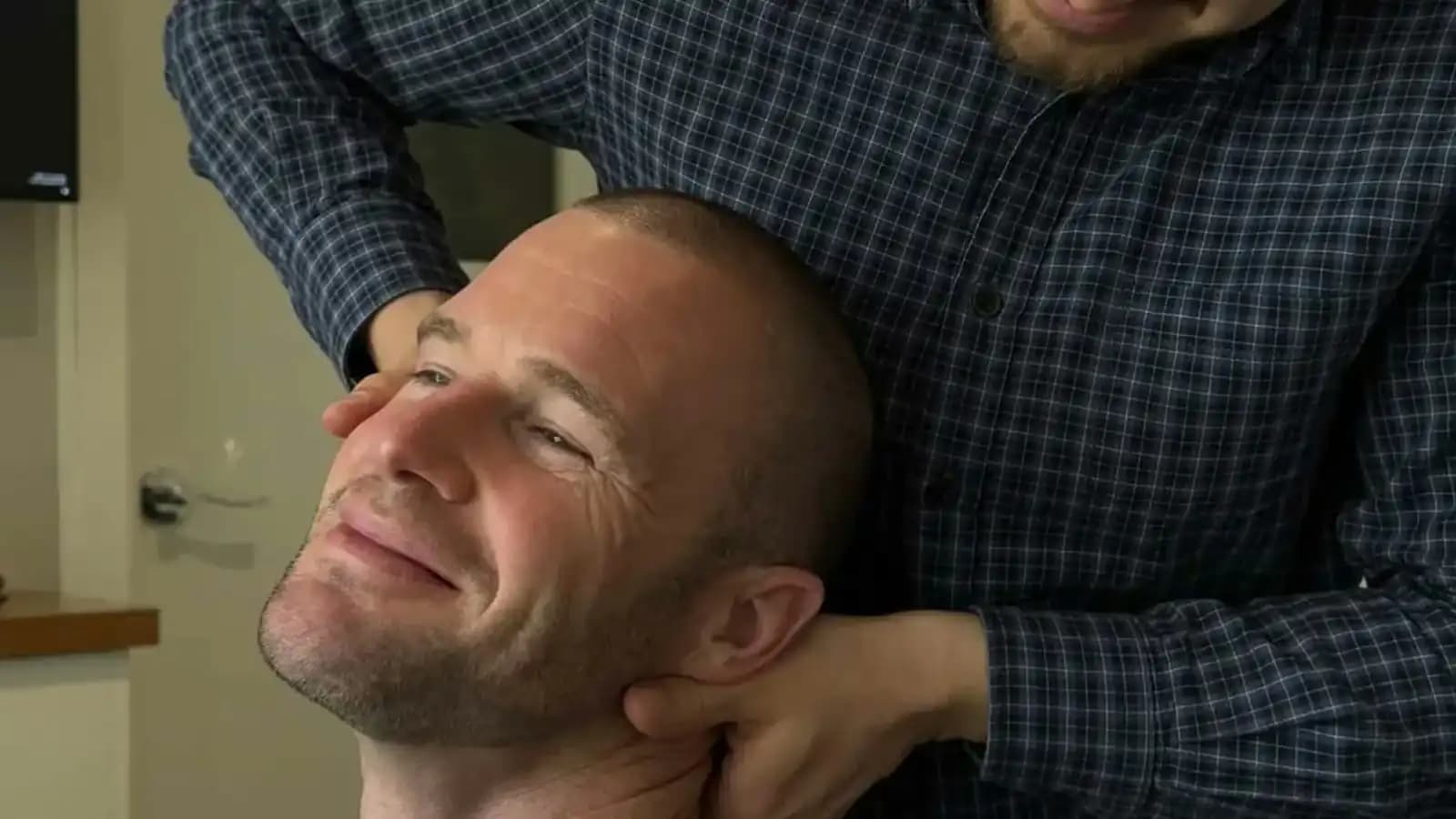
An adjustment is a movement delivered by hand to a selected joint of the spine. It is quick, it is specific to one area, and it is over in a moment. In my experience, most people describe it as a firm push or a stretch, sometimes with a pop, rather than as pain.
How it feels for you depends on a few things: which part of the spine is involved, how sore the area already is when you come in, and how relaxed you are on the table. An area that is already irritated can feel tender when it is touched or moved, and that is something I want to know about rather than push through.
I cannot promise that nothing will be uncomfortable, because I have not examined you yet and everyone is different. What I can promise is that you will be told what I am about to do before I do it.
What does an adjustment actually feel like?
Depending on the area, you might be lying face down, lying on your side or sitting. I position you, explain what I am going to do, and then make one quick, short movement at the joint the examination has pointed to.
You may hear a click or pop. That is gas forming in the fluid inside the joint, not bone, and it is not a sign the adjustment was any better or worse than one without a sound. I have written about that separately in are you cracking my bones?
In the Gonstead technique, which is how I work, the aim is to adjust a specific level of the spine rather than to loosen the whole back in one go. The level is chosen by cross-checking several parts of the examination, so the adjustment goes where the findings agree. There is more on that in what a Gonstead adjustment involves.
Will I be sore after an adjustment?
You might be, and it is worth knowing that before you come in rather than being caught off guard.
Research on reactions after spinal manipulation has found that short-lived reactions are common. A large Norwegian study of patients seeing chiropractors found that the most common reactions were local soreness or discomfort, followed by less frequent ones such as headache or tiredness, and that most were mild or moderate and did not last long.[1] A Belgian study of patients receiving spinal manipulation across a number of practices reported a similar picture: reactions were common, usually began within hours of the visit and were generally short-lived.[2]
So if your back or neck feels a little sore or stiff the next day, that is in line with what these studies describe. Tell me about it at your next visit, because how you respond helps me decide what to do next time.
If something feels unusual, or a reaction is stronger or lasts longer than you expected, ring the clinic on (03) 9548 5050 and tell me. If it sits outside chiropractic, I will refer you to your GP.
Does the examination hurt?
Most of the examination is not painful. Part of the Gonstead examination is watching how you stand and move.
The hands-on parts, where I feel the spine at rest and then while it moves, can be tender over an area that is already sore. That tenderness is useful information, but you do not have to put up with it. Tell me and I will ease off.
What if I am already in a lot of pain?
Then that changes how the visit runs. When someone comes in sore, I take more time over the history and the examination, I am lighter with my hands, and I am more cautious about whether to adjust on the day at all.
Some findings mean an adjustment is not the right thing that day, and some mean I will refer you to your GP or another practitioner before anything else happens. Pain on the day is never a reason to rush. It is a reason to be careful.
Can I say no to being adjusted?
Yes, always. Before any adjustment I explain which area I am proposing to adjust and why, how I will position you and the risks involved, and you decide. You can ask me to stop at any point, including partway through.
If you would rather not be adjusted at your first visit, say so. We talk it through instead, and you can take the time you need to think about it. There is no obligation to continue with care.
How can I make the first adjustment easier?
A few practical things help:
- Wear something comfortable that you can move in.
- Tell me if you are nervous. It changes how I explain things, not whether you are welcome.
- Breathe out and let your shoulders drop when I position you. Holding your breath tends to make people tense up.
- Tell me straight away if any position is uncomfortable, so I can change it.
- Mention anything in your health history you are unsure about, even if it seems unrelated.
What happens at a first visit?
At your first visit at Advanced Chiropractic, I measure your heart rate variability (HRV), take a full health history, examine you and carry out nervous system testing. X-rays are taken only if they are clinically indicated. Then comes the Gonstead examination and analysis, and an adjustment only if it is clinically indicated and you agree to it. You can read the whole walk-through on your first visit.
Where to from here
If worry about pain is what has kept you from booking, ask me about it first. Call the clinic on (03) 9548 5050 and I am happy to talk it through.
Or come along to our free talk, every Wednesday at 7pm (except over Christmas) at the clinic, 869 Springvale Road, Mulgrave. It covers spinal and nervous system health, and everyday habits for looking after your spine and staying active. It runs about 40 minutes, it is open to anyone, and you can bring someone with you. Call (03) 9548 5050 to book a spot.
Sources
- 1. Senstad O, Leboeuf-Yde C, Borchgrevink C. Frequency and characteristics of side effects of spinal manipulative therapy. Spine, 1997;22(4):435-40. View source
- 2. Cagnie B, Vinck E, Beernaert A, Cambier D. How common are side effects of spinal manipulation and can these side effects be predicted? Manual Therapy, 2004;9(3):151-6. View source
This article is general information, not a diagnosis or a substitute for individual care. The guideline and regulatory positions above are drawn from the cited sources.